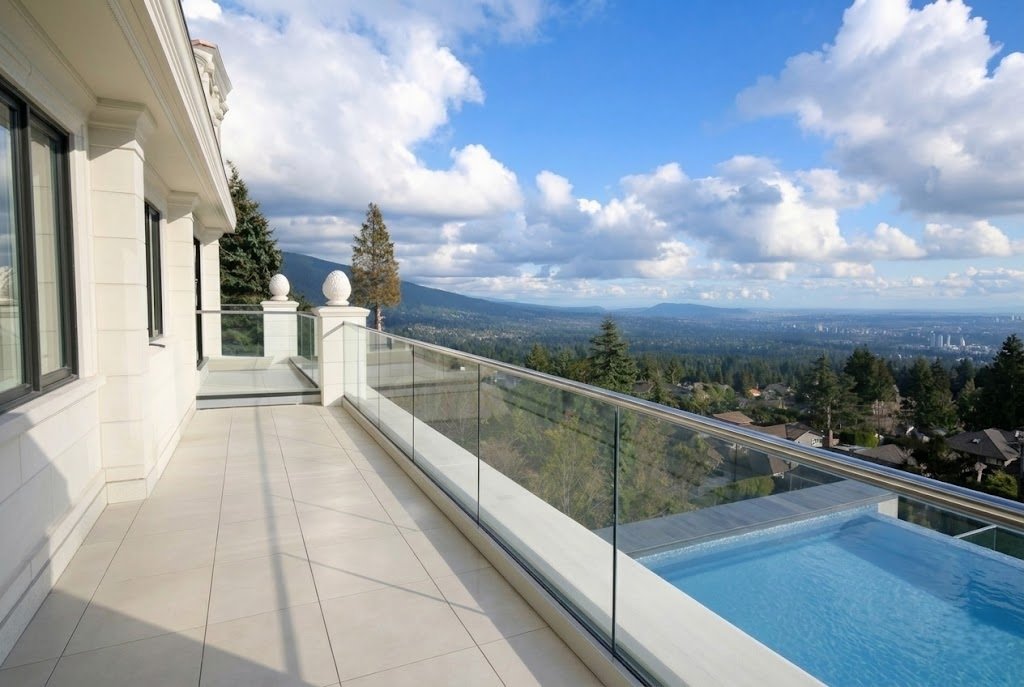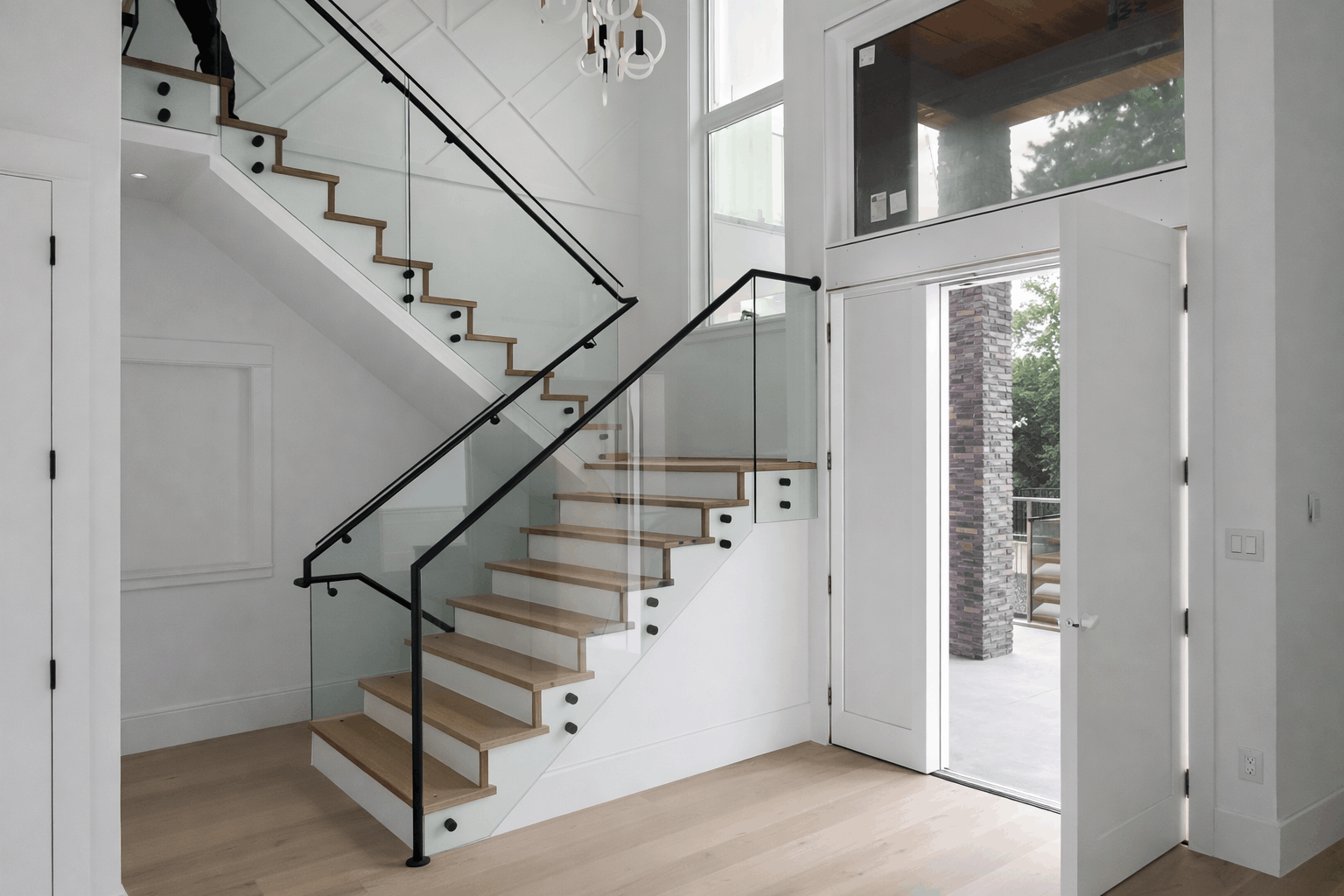
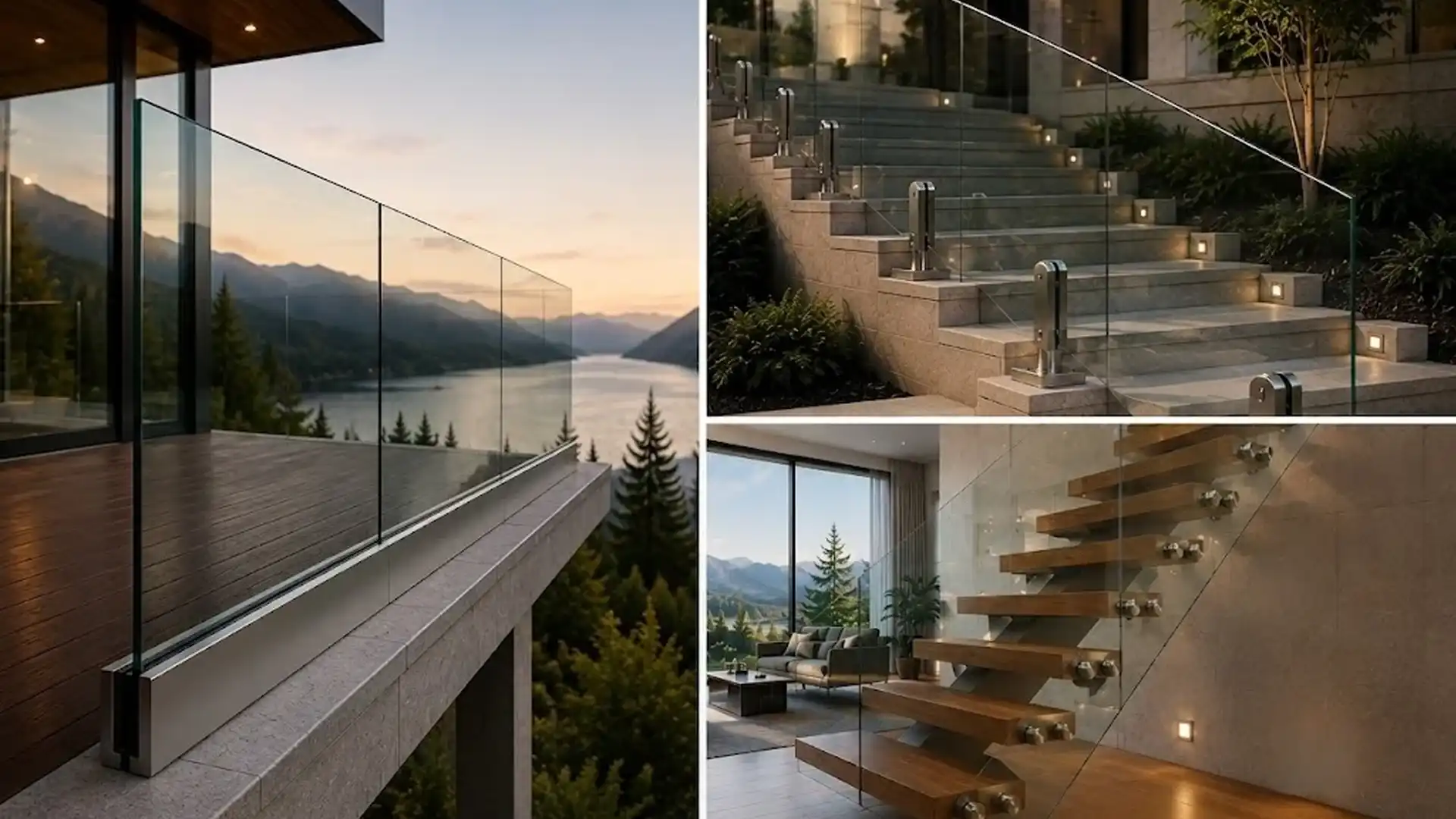
Frameless glass railings have become a defining feature of modern residential and commercial architecture. Whether installed on a deck overlooking the mountains, a balcony with a city view, a rooftop patio, or an interior staircase, glass railings provide safety while maintaining openness, natural light, and unobstructed sightlines.
As homeowners begin researching glass railing options, they often encounter terms such as Base Shoe, Spigot, Standoff, Top Mount, and Side Mount. While these terms are frequently used together, they describe different aspects of a glass railing system. One of the most common misconceptions is assuming that Base Shoe, Spigot, and Standoff refer to mounting methods. In reality, these terms describe the railing system itself, while Top Mount and Side Mount refer to how the system is attached to the structure.
Understanding this distinction is important because a successful glass railing project involves both selecting the appropriate railing system and determining the most suitable installation method. In this guide, we will explore the three most common frameless glass railing systems, explain the differences between Top Mount and Side Mount installations, and discuss where each configuration is commonly used.
1- Decision One: Selecting the Railing System
The most common frameless glass railing systems include:
These systems determine how the glass is supported and how much hardware remains visible after installation.
2- Decision Two: Selecting the Installation Method
Once the railing system is selected, the installation method must also be considered.
The two most common installation methods are:
It is important to note that not every railing system can be installed using both methods.
Because these decisions are interconnected, understanding both elements provides a clearer picture of how different railing systems function.
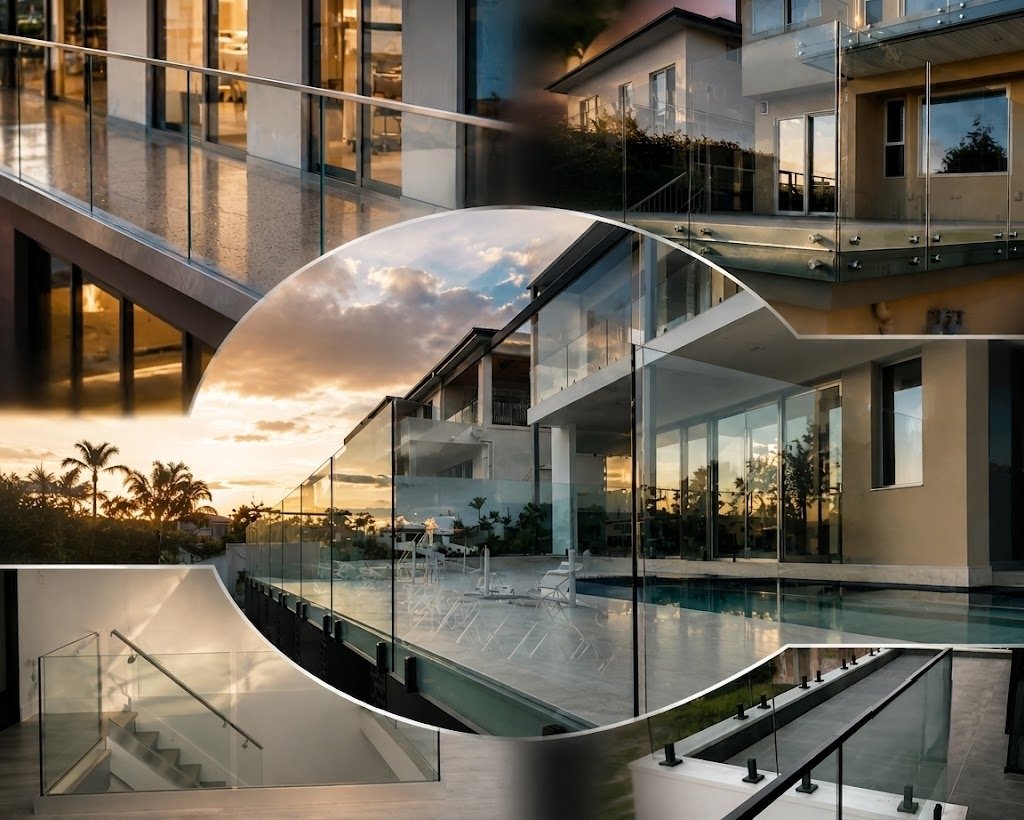
In a Top Mounted Base Shoe system, the aluminum Base shoe is secured directly onto the walking surface of the deck, balcony, or staircase.
This configuration is commonly seen in both residential and commercial construction.
Top Mounted Base Shoe systems are frequently used on concrete structures, covered balconies, and projects where the structural design supports installation through the walking surface.
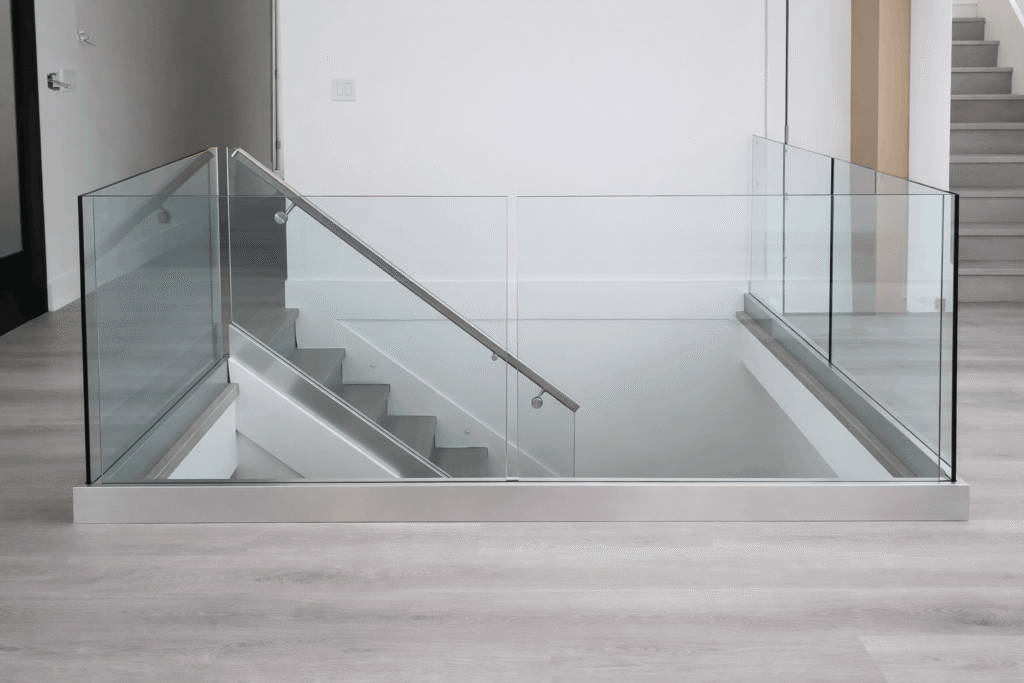
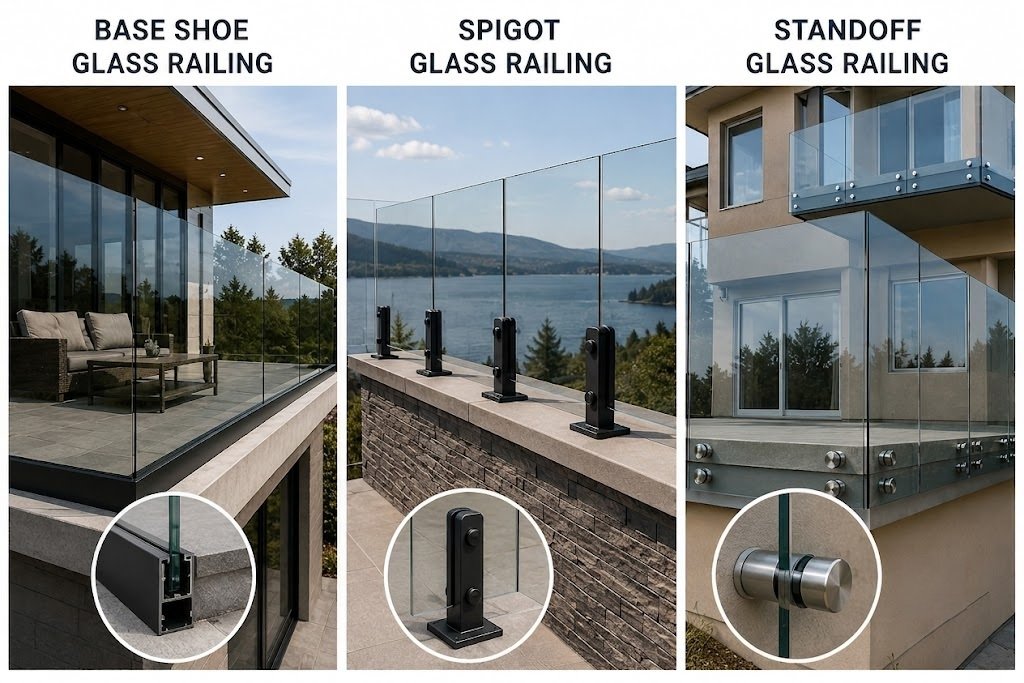
Base Shoe Glass Railings support the glass using a continuous aluminum Base Shoe installed along the bottom edge of the panel. The glass is secured inside the Base Shoe, creating a clean appearance with minimal visible hardware. Because the support system extends continuously beneath the glass, Base Shoe railings are frequently specified in modern residential and commercial projects.The visual simplicity of this system allows the glass itself to become the dominant design feature.
Base Shoe systems are frequently used in:
Because the system can accommodate large glass panels, it is often incorporated into projects where maintaining views is an important design consideration.
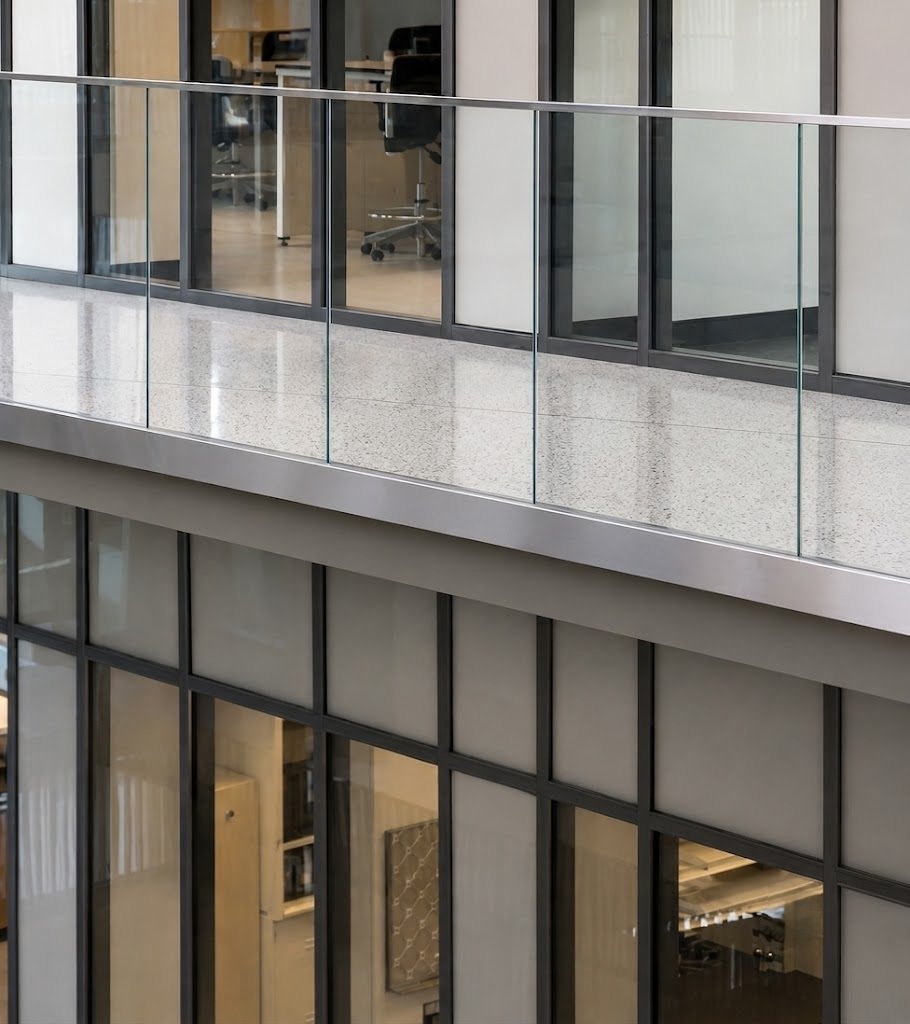
In a Side Mounted Base Shoe system, the Base Shoe is attached to the vertical face of the supporting structure. The glass remains above the walking surface while the support Base Shoe is positioned along the exterior or interior edge.
Side Mounted Base Shoe systems are commonly used on exterior decks and balconies where preserving the finished walking surface is an important consideration.
Top Mounted Spigot systems are among the most recognizable frameless railing configurations. The spigots are secured directly to the walking surface, and the glass panels are inserted into the individual supports.
This configuration is commonly used on decks, patios, and balconies throughout residential construction.
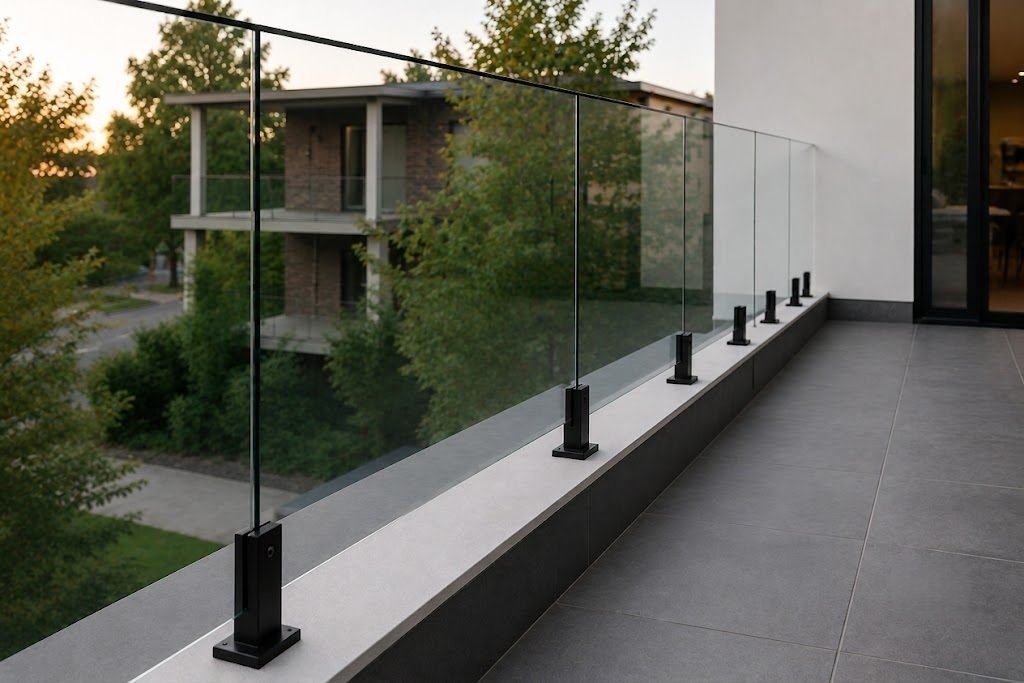
Spigot Glass Railings support the glass using individual metal spigots positioned at intervals along the bottom edge of each panel. Unlike Base Shoe systems, which use a continuous Base shoe, Spigot systems rely on individual support points. This creates a frameless appearance while exposing more hardware than a Base Shoe system. Spigot railings have become a common choice in both residential and commercial applications due to their clean appearance and installation flexibility.
Spigot systems are frequently used in:
Because each glass panel is independently supported, Spigot systems can adapt well to a variety of layouts and project conditions.
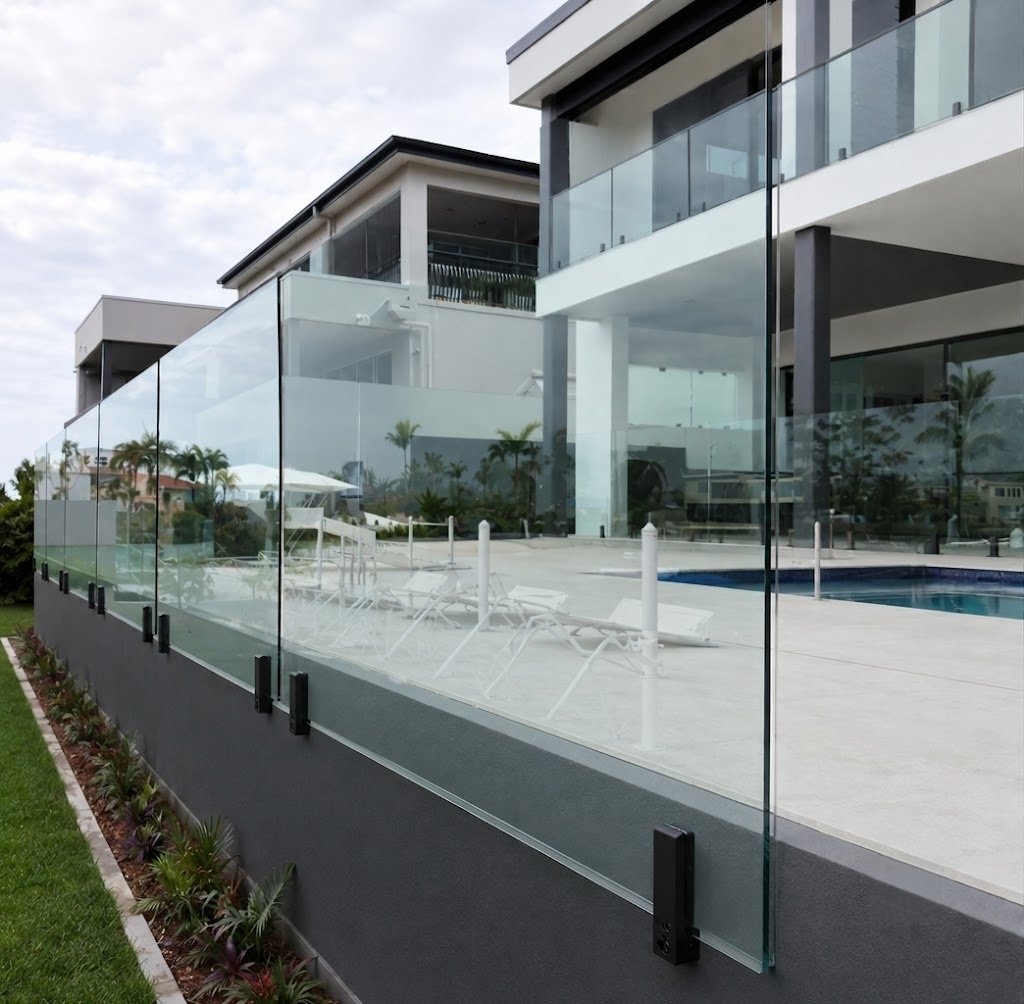
Certain Spigot systems can also be installed using a Side Mount configuration. Instead of attaching to the deck surface, the spigots are secured to the side face of the structure.
Side Mounted Spigot systems are often considered during projects where the design team wishes to keep the deck surface free from railing hardware.
Unlike Base Shoe and Spigot systems, Standoff Glass Railings are designed exclusively as Side Mounted systems. Because the structural concept relies on fastening the glass through its face into the supporting structure, a Top Mounted version of a Standoff system does not exist.
This unique mounting method contributes significantly to the visual identity of the system.
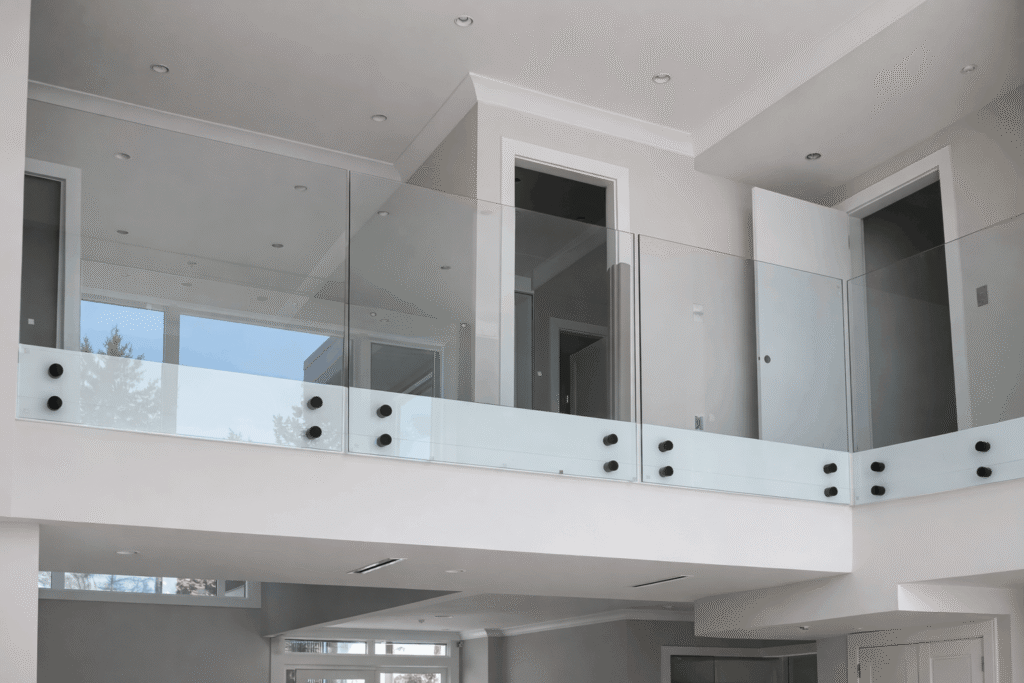
Standoff Glass Railings use circular stainless steel mounting discs that secure the glass through pre-drilled holes within the panel. The glass is attached directly to the side face of the supporting structure, creating a distinctive floating appearance. Unlike Base Shoe and Spigot systems, which support the glass from below, Standoff systems support the glass from the side. The exposed stainless steel standoffs become part of the architectural design.
Standoff systems are widely used in both residential and commercial projects. They are particularly popular for interior glass railings and modern staircases because the exposed mounting discs complement contemporary architectural designs.
Common applications include:
Within interior environments, Standoff systems are one of the most frequently specified frameless railing options due to their distinctive appearance and clean sightlines.
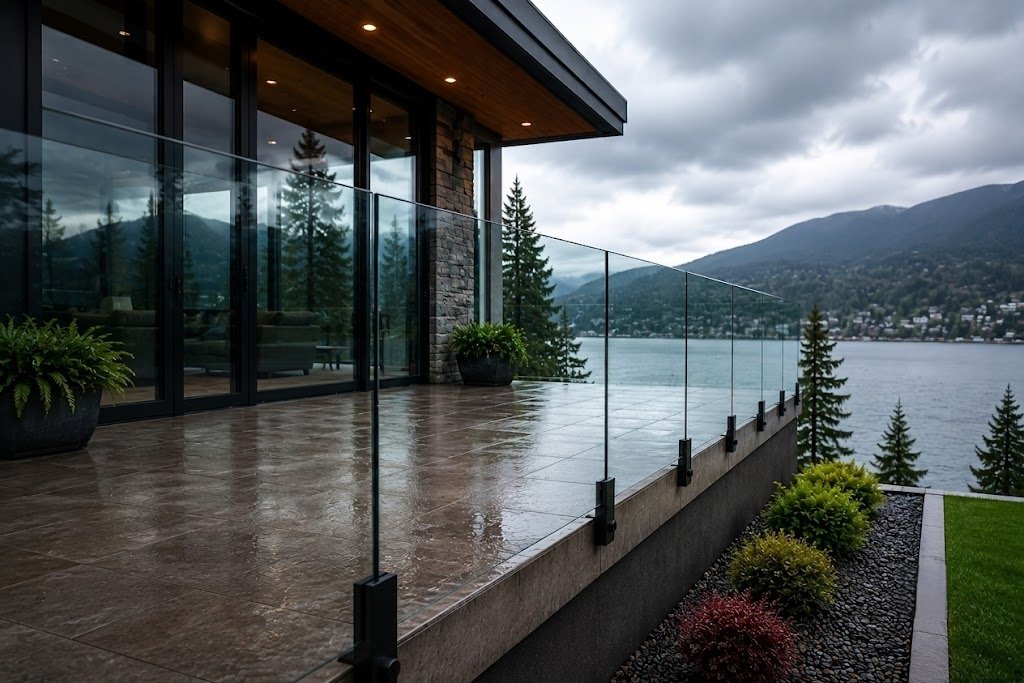
For exterior decks and balconies that are fully exposed to the weather, waterproofing should be a key consideration when selecting a glass railing system.
In Greater Vancouver’s rainy climate, top-mounted railing systems may require penetrations through the finished deck surface and waterproofing assembly. While these systems can be installed successfully when properly detailed, any penetration through a waterproof membrane deserves careful planning and execution.
For this reason, many designers and installers prefer to evaluate side-mounted options for uncovered decks, rooftop patios, and elevated outdoor spaces. By keeping the attachment points away from the walking surface, side-mounted systems can help simplify waterproofing details and reduce potential concerns related to water infiltration over time.
The most appropriate solution ultimately depends on the building design, structural conditions, waterproofing system, and project requirements. Consulting with experienced railing professionals during the design stage can help ensure the selected system complements both the architecture and the long-term performance of the structure.
When selecting a frameless glass railing, it is helpful to think about both the railing system and the installation method.
Questions that often influence the final decision include:
By understanding how Base Shoe, Spigot, and Standoff systems relate to Top Mount and Side Mount installations, homeowners can have more informed conversations with designers, contractors, and glass professionals.

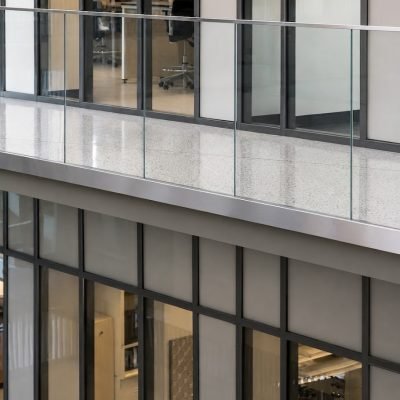
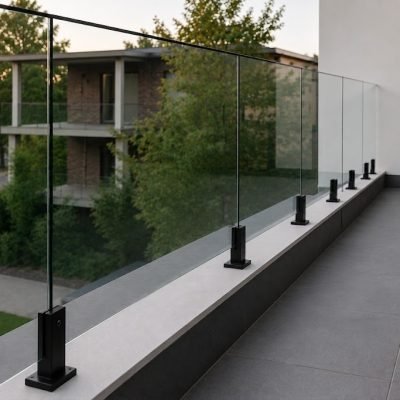
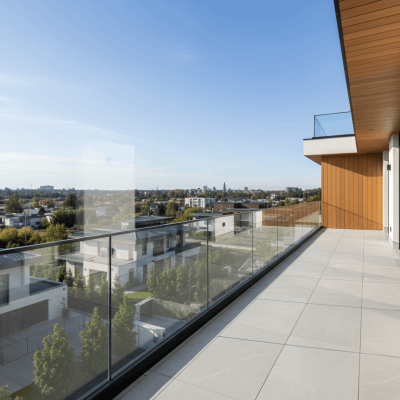
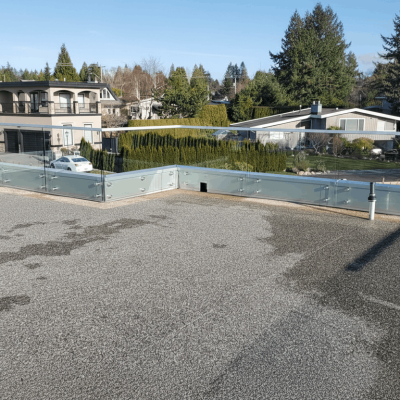
Frameless glass railings combine safety, transparency, and modern design in a way few other railing systems can achieve. However, selecting the right solution involves more than simply choosing a style of hardware.
Base Shoe, Spigot, and Standoff systems each support glass differently and create distinct visual effects. Likewise, Top Mount and Side Mount installations influence how the railing integrates with the surrounding structure, waterproofing assembly, and overall architectural design.
It is also worth noting that these are not the only glass railing systems available. Other options, such as aluminum post railings and clamp-style glass railings, are commonly used in residential and commercial projects. Depending on the system, they may be available in either top-mounted or side-mounted configurations and offer their own design and structural characteristics.
In this guide, we have focused on some of the most widely used frameless glass railing systems and highlighted key considerations that homeowners, designers, and builders should keep in mind when evaluating these systems—or similar alternatives—for a project.
Whether you’re planning an interior staircase, an exterior deck, a rooftop patio, or a commercial installation, understanding how different railing systems and mounting methods function is an important first step toward making an informed decision and achieving a successful long-term result.
At GlassEdge, we specialize in custom frameless glass railings throughout Metro Vancouver, including Base Shoe, Spigot, Standoff, interior glass railings, exterior glass railings, deck glass railings, balcony glass railings, and staircase glass railings. Using premium tempered glass, high-quality hardware, and precision installation techniques, we help homeowners and builders create safe, modern, and visually striking spaces designed to perform beautifully for years to come.
If you have questions about glass railing systems, mounting options, waterproofing considerations, or project design, feel free to contact our team at 672-822-2255. We’re always happy to provide professional guidance, product recommendations, and free estimates for your project.