
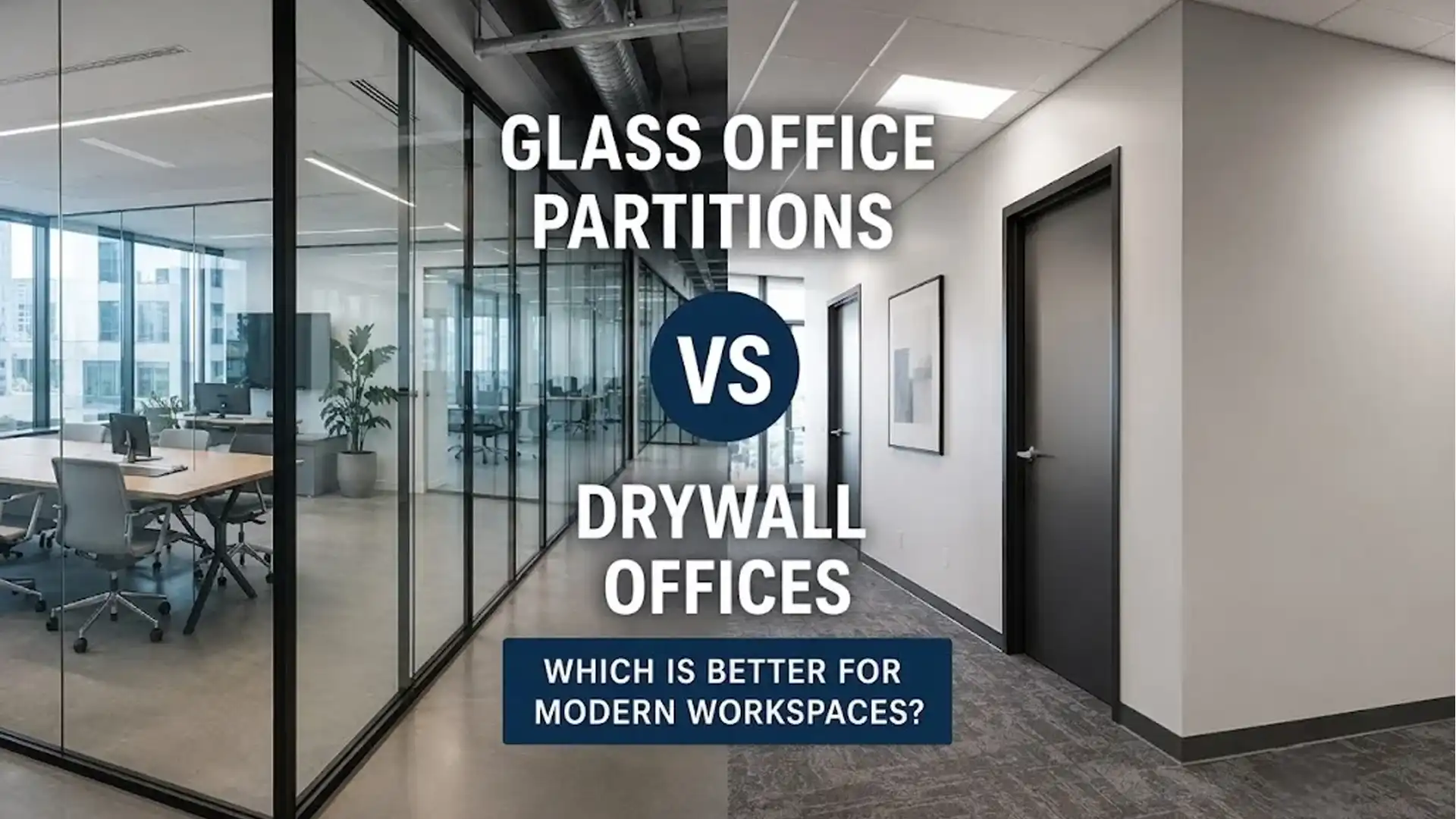
When designing a new office or renovating an existing workspace, one of the biggest decisions businesses face is how to divide the space efficiently while maintaining productivity, privacy, and professional appearance. For decades, drywall offices have been the standard solution for commercial interiors. However, modern workplace design has shifted significantly, leading many businesses to explore alternatives such as Office Glass Walls, Frameless Office Partitions, Glass Meeting Room Partitions, and Glass Conference Room Walls.
Both solutions can create functional work environments, but they differ considerably in design, privacy, flexibility, maintenance requirements, and long-term value. Rather than asking which option is universally better, businesses should understand how each solution performs across the areas that matter most to modern workplaces
The visual appearance of an office often influences both employee experience and client perception.
Office Glass Walls have become increasingly popular because they create an open and contemporary environment while maintaining clearly defined workspaces. By allowing visibility throughout the office, glass systems help create a sense of transparency and spaciousness that aligns with modern workplace trends.
Frameless Office Partitions further enhance this aesthetic by eliminating bulky framing and creating clean architectural sightlines. Many businesses choose frameless systems because they deliver a premium appearance while supporting a modern corporate image.
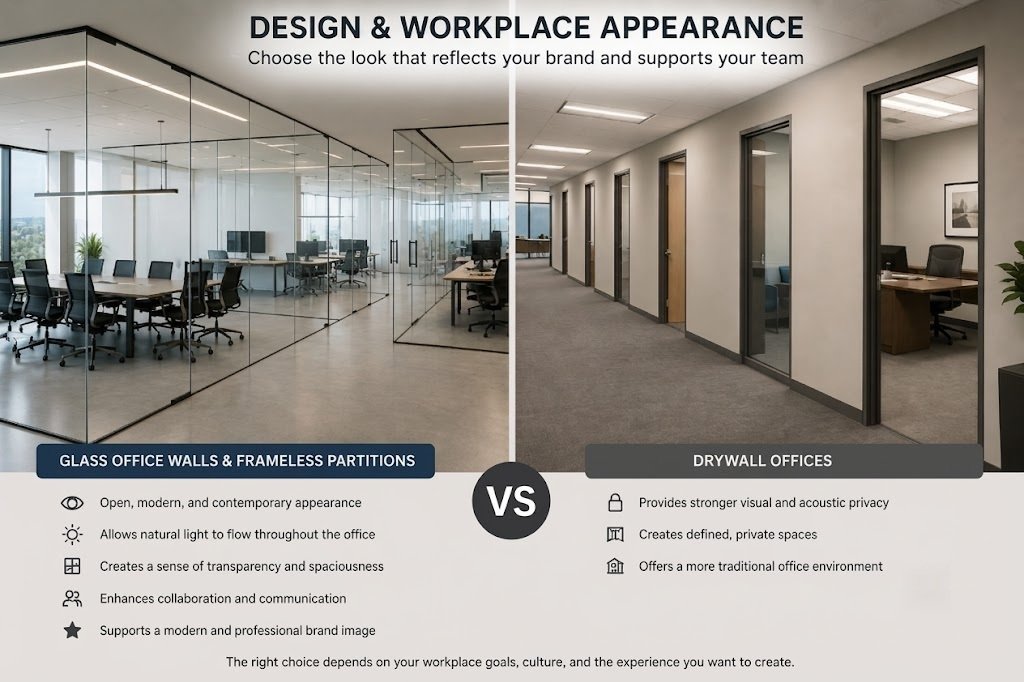
Glass Office Partitions and Office Glass Walls are becoming increasingly popular among businesses that want to create defined workspaces while preserving natural light, openness, and a modern professional appearance.
Drywall offices create a different visual experience. Solid walls provide stronger separation between rooms and can contribute to a more traditional office atmosphere. For organizations that prefer clearly defined private spaces, drywall remains a practical and familiar solution.
The ideal choice depends largely on the image a business wants to present and the type of workplace environment it hopes to create.
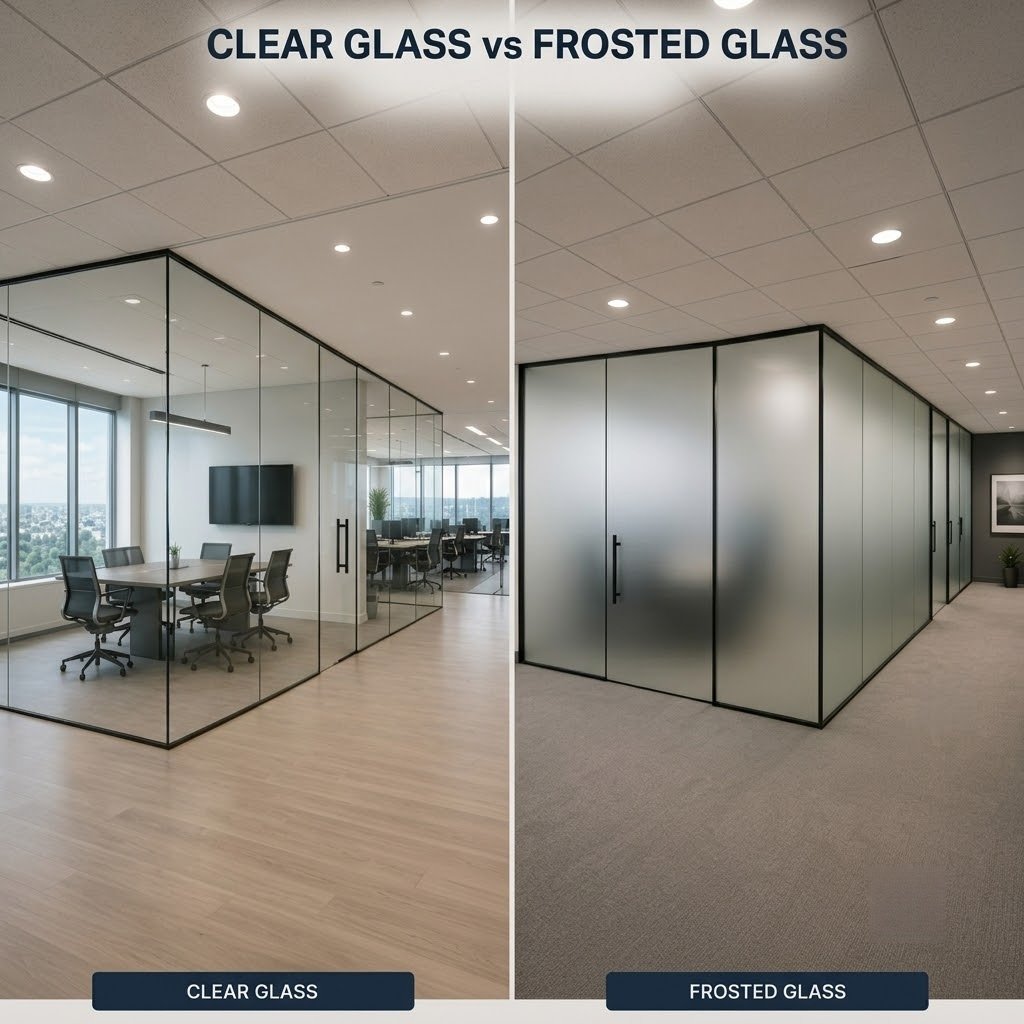
Privacy is often one of the most important considerations when comparing Glass Office Partitions and drywall offices.
Even though drywall offices provide complete visual separation and can be particularly effective in environments where confidentiality is essential, glass office partitions can also offer a high level of privacy. Options such as frosted glass, privacy films, and smart glass technology allow businesses to maintain confidentiality while still benefiting from the openness, natural light, and modern appearance that glass partitions provide. This allows companies to enjoy the advantages of glass office systems without compromising workplace privacy.
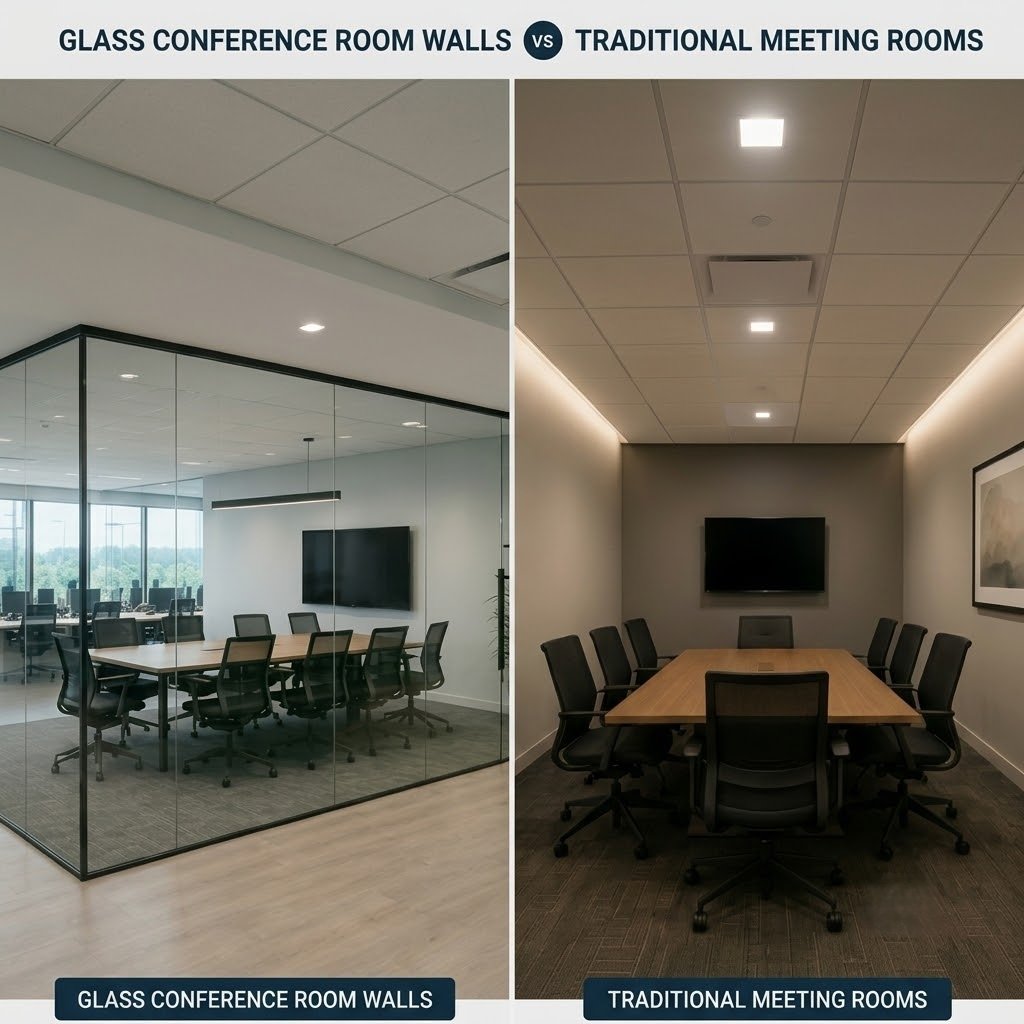
Traditional drywall conference rooms, on the other hand, provide complete enclosure and may be better suited for organizations that regularly conduct highly confidential discussions. The right choice ultimately depends on how your team works, communicates, and uses its meeting spaces on a daily basis.
Meeting rooms are where ideas are shared, strategies are developed, and important business decisions are made. The design of these spaces can have a significant impact on communication, productivity, and the overall workplace experience.
Glass Conference Room Walls have become a preferred solution for modern offices because they create dedicated meeting areas without making them feel isolated from the rest of the workplace. Unlike traditional enclosed rooms, glass systems maintain a sense of connection between teams while presenting a clean, professional appearance. They are especially popular among businesses looking to create a collaborative, client-friendly environment while maintaining the functionality of a private meeting space.
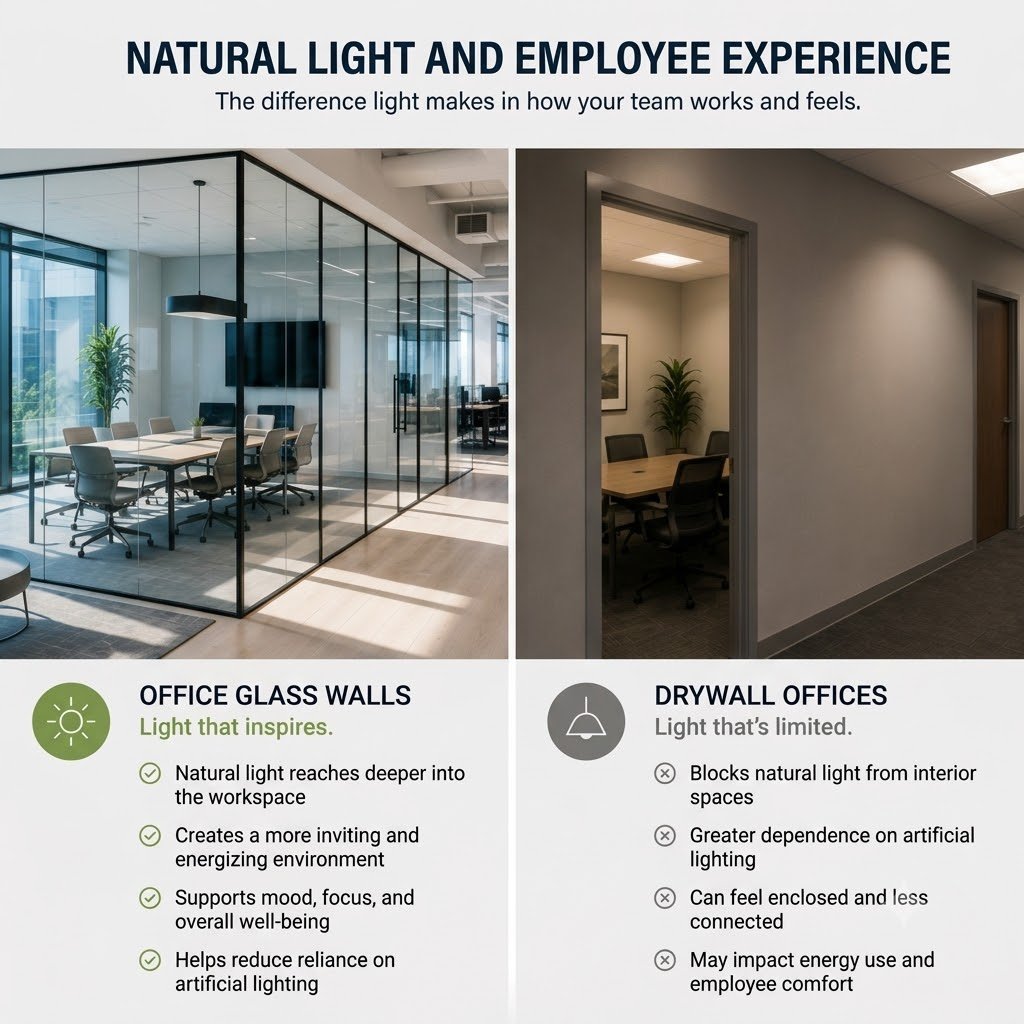
One of the most noticeable differences between Office Glass Walls and drywall offices is the way they interact with natural light. Glass partition systems allow daylight to travel deeper into the workspace, helping brighten interior offices, conference rooms, and collaborative areas. This often creates a more welcoming environment and reduces the closed-in feeling that can occur in heavily partitioned offices.
Drywall walls naturally block light transmission, meaning interior rooms frequently rely more heavily on artificial lighting.
As workplace design increasingly focuses on employee well-being and workplace experience, access to natural light has become a major factor influencing office design decisions.
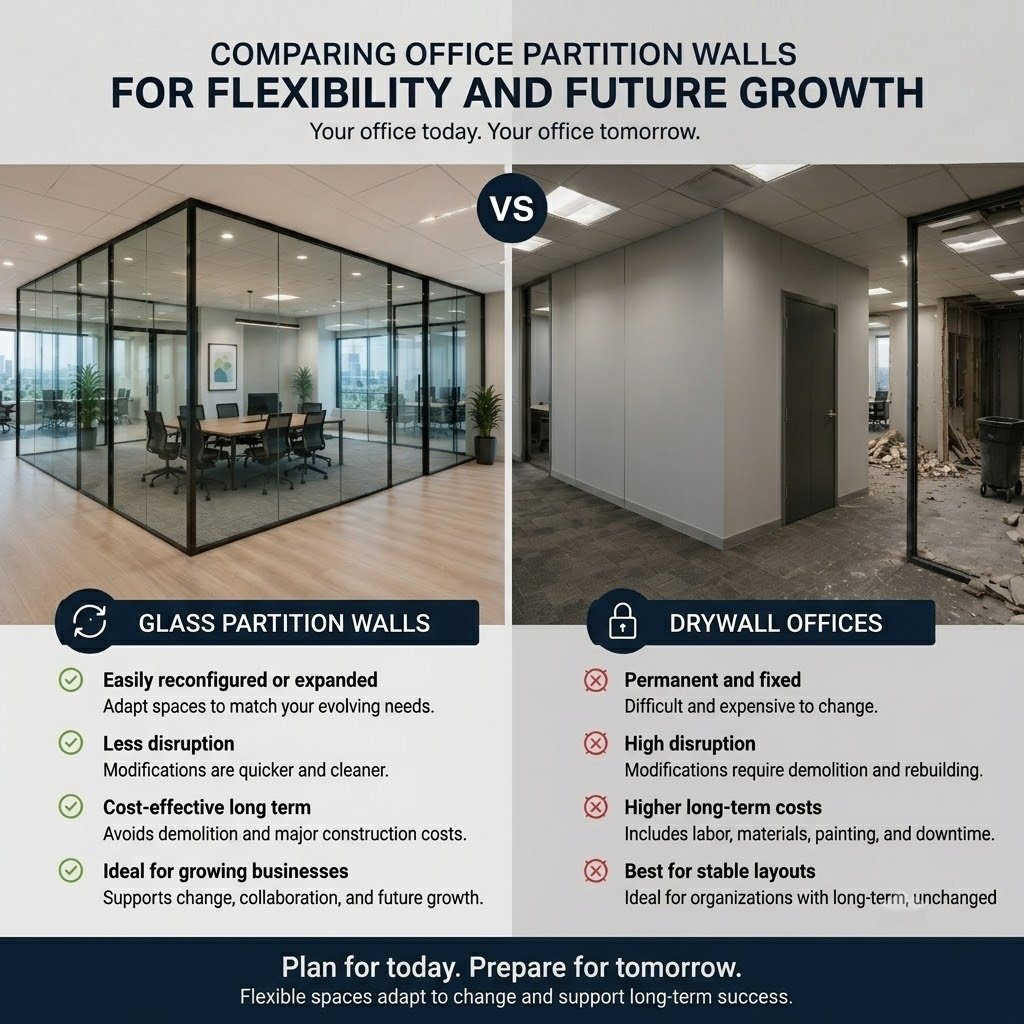
Teams grow, departments evolve, and office layouts often change over time. Because of this, flexibility has become an increasingly important consideration when selecting Office Partition Walls.
Many glass partition systems can be reconfigured, expanded, or modified with less disruption than permanent drywall construction. Flexibility can be particularly valuable for growing businesses that anticipate future changes.
Drywall offices provide a more permanent solution and may be ideal for organizations with stable long-term layouts. However, modifications often require demolition, reconstruction, painting, and additional project costs.
When planning for future growth, flexibility can become a significant factor in the overall value of an office partition system.
Installation timelines and maintenance obligations can also influence the decision between Glass Office Partitions and drywall offices.
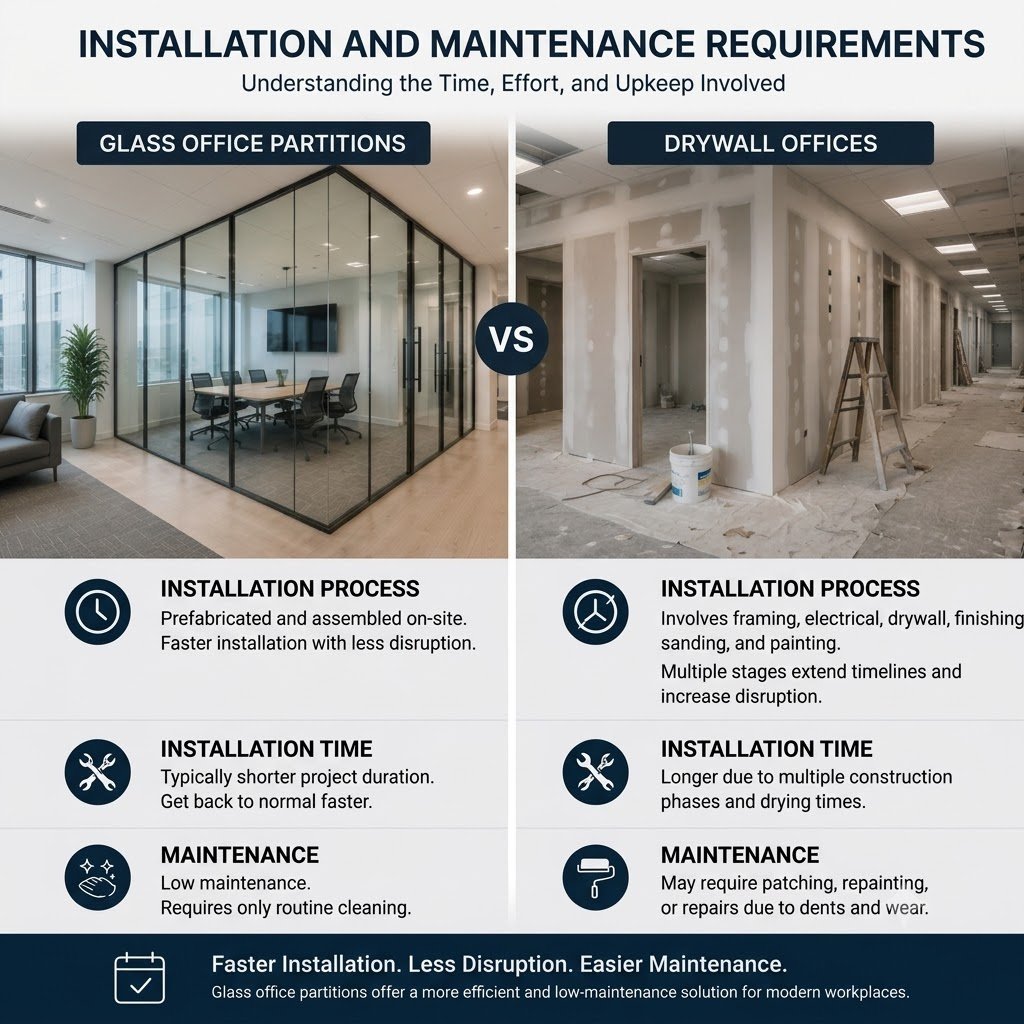
Drywall construction typically involves framing, electrical work, drywall installation, finishing, sanding, and painting. These multiple stages can extend project timelines and create greater disruption during renovation projects.
Glass partition systems are usually fabricated before installation and assembled on-site once manufacturing is complete. This process can often reduce installation time and workplace disruption.
From a maintenance perspective, drywall surfaces may eventually require patching, repainting, or repairs due to dents and wear. Glass systems generally require just routine cleaning.
There is no universal winner when comparing Glass Office Partitions and drywall offices.
Each solution serves different workplace objectives and offers unique advantages depending on the needs of the organization. By evaluating design goals, privacy requirements, acoustic performance, flexibility, maintenance expectations, and long-term costs, businesses can select a partition system that supports both productivity and growth.
At GlassEdge, we design and install custom Office Glass Walls, Frameless Office Partitions, Glass Meeting Partitions, Glass Conference Room, and Office Partition Walls throughout Greater Vancouver, helping businesses create workspaces that are functional, professional, and built for the future.